



Subsurface Characterization and Engineering Parameters
Subsurface characterization involves interpretation of geotechnical investigation data to define soil and rock profiles, shear strength parameters, compressibility characteristics, and groundwater behavior. These parameters are translated into engineering inputs suitable for structural analysis, including modulus of subgrade reaction, ultimate bearing capacity, and pile-soil interaction properties. Particular attention is given to variability in stratigraphy, which can significantly influence differential settlement patterns in high-rise cores and perimeter systems. This phase establishes the fundamental ground model used for all subsequent foundation design and interaction studies.

Foundation System Development
Foundation system development focuses on selecting and evaluating appropriate deep and shallow foundation solutions for high-rise applications. Common systems include piled rafts, barrettes, drilled shafts, and combined raft-pile systems optimized for load sharing between end-bearing and friction resistance. System selection is governed by axial capacity requirements, lateral resistance demands, settlement tolerance, and construction constraints. Load distribution mechanisms between piles and raft elements are analyzed to ensure efficient utilization of geotechnical capacity while controlling total and differential settlement within acceptable thresholds.
Soil-Structure Interaction Analysis
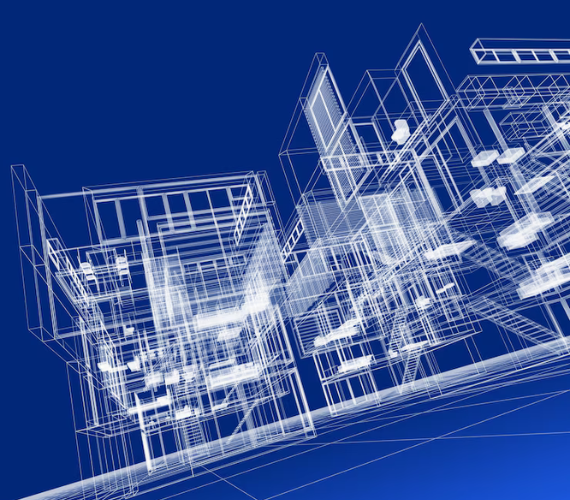
Soil-structure interaction analysis evaluates the coupled response between foundation elements and the supporting ground under combined gravity, wind, and seismic loading. Nonlinear spring models or continuum-based finite element approaches are used to simulate stiffness degradation and load redistribution effects. For high-rise structures, interaction between core walls and foundation systems is critical in controlling rotation and overturning stability. This analysis ensures that structural stiffness assumptions remain consistent with realistic ground response, particularly under variable loading conditions and long-term settlement behavior.
Excavation and Basement Structural Integration
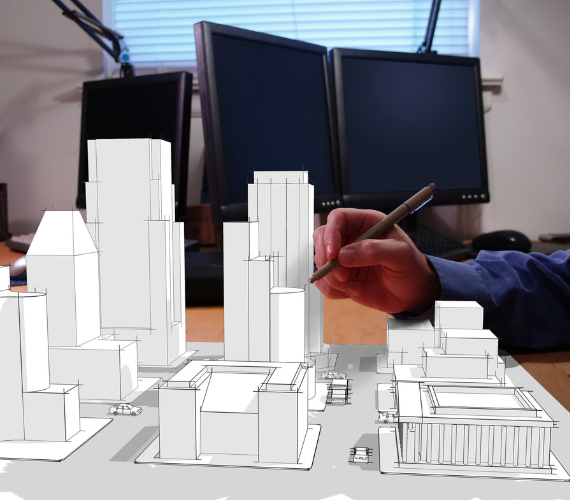
Excavation engineering is integrated into foundation design to address staged construction effects, lateral earth pressures, and groundwater control conditions. Deep basements typical of high-rise developments introduce significant retaining wall demands, requiring diaphragm walls, secant piles, or anchored systems. Structural integration ensures that basement walls function as both temporary earth retention systems and permanent load-resisting elements. Uplift resistance, base heave stability, and construction sequencing effects are evaluated to maintain structural integrity throughout excavation and basement formation stages.

Settlement and Long-Term Performance
Settlement analysis evaluates both total and differential movement under sustained structural loading, with particular focus on time-dependent consolidation effects in fine-grained soils. For high-rise cores, differential settlement control is critical to maintaining vertical alignment of elevator systems and façade interfaces. Creep effects in both soil and structural materials are considered where relevant. Long-term performance criteria are established to ensure that deformations remain within tolerable limits for serviceability, structural integrity, and architectural alignment over the building lifecycle.
Deliverables
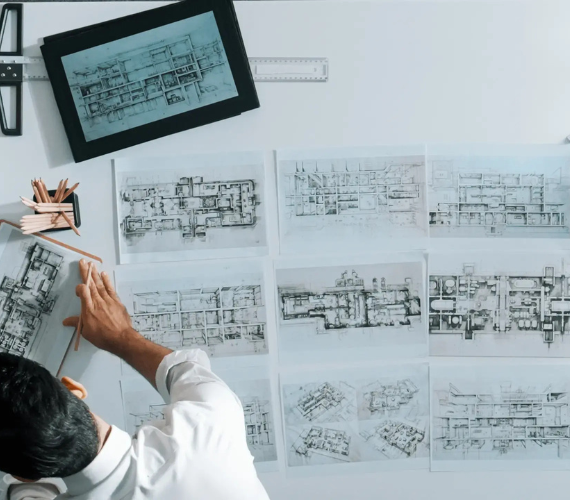
Deliverables include foundation design reports, soil-structure interaction models, pile layout and capacity summaries, settlement predictions, and excavation support analyses. Documentation also provides interpretation of geotechnical data and translation into structural engineering parameters. Outputs are structured to support coordination with superstructure design, ensuring compatibility between ground conditions and structural demands. The result is a fully integrated foundation strategy that supports safe and efficient high-rise structural performance.