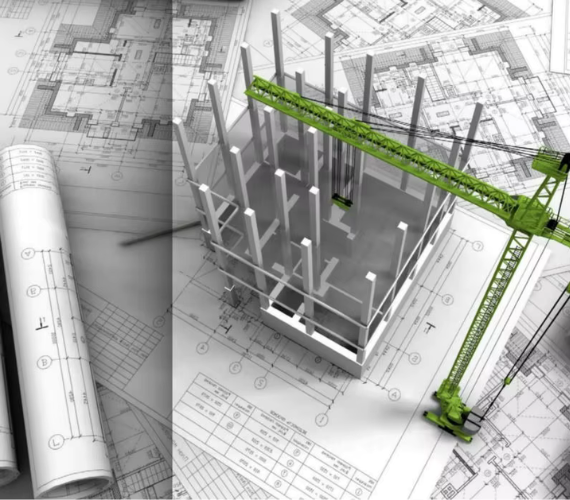



Seismic Demand Characterization
Seismic demand characterization involves defining site-specific ground motion inputs based on regional seismicity, soil conditions, and hazard levels. Response spectra are developed and calibrated for multiple performance objectives, including serviceability, damage limitation, and collapse prevention. For high-rise structures, long-period amplification effects and near-fault pulse characteristics are explicitly considered. Ground motion records are selected and scaled for nonlinear time-history analysis to capture realistic structural response. This process establishes a consistent seismic demand framework aligned with governing codes and performance-based design methodologies.

Global Structural Response Evaluation
Global response evaluation focuses on assessing how lateral systems distribute seismic forces throughout the height of the building. Modal interaction effects, higher-mode contributions, and torsional irregularities are explicitly captured using three-dimensional finite element models. Interstory drift demands, residual displacements, and internal force redistribution patterns are evaluated under nonlinear response conditions. Particular attention is given to coupling between core walls, perimeter systems, and outriggers where applicable. This ensures that seismic energy is distributed in a controlled manner without concentration in localized structural regions.
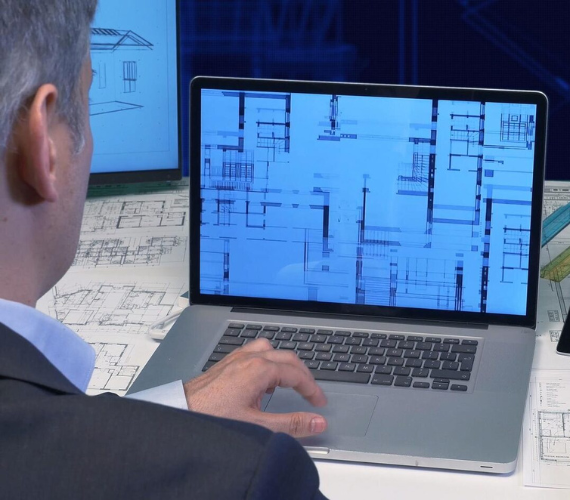
Nonlinear Analysis and Performance-Based Design
Nonlinear analysis methods are used to simulate material yielding, cracking, and stiffness degradation under increasing seismic intensity. Fiber-based modeling of reinforced concrete elements and plastic hinge formulation in steel members enable accurate prediction of inelastic response. Performance objectives are defined at multiple hazard levels, typically including immediate occupancy, life safety, and collapse prevention. Structural elements are proportioned to ensure ductile behavior and stable hysteretic energy dissipation. This approach allows direct verification of expected performance rather than reliance on prescriptive code assumptions alone.
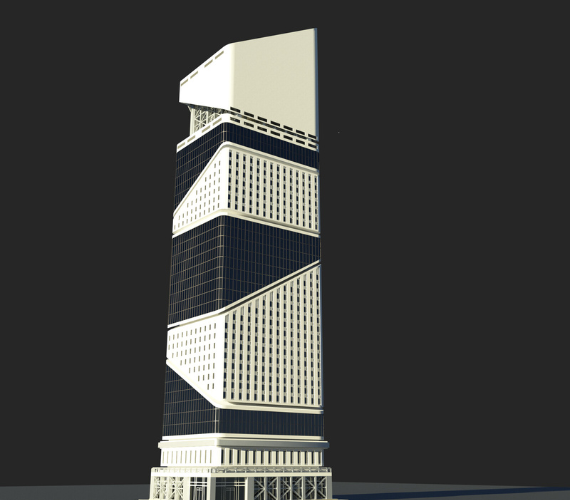
Energy Dissipation and Ductility Design
Energy dissipation mechanisms are developed through controlled yielding of structural elements, supplemented where necessary by supplemental damping systems. Ductility demand is managed through capacity design principles, ensuring that plastic hinges form in predefined locations while protecting critical elements from brittle failure. Detailing strategies for reinforcement confinement, joint behavior, and connection integrity are integrated into the design. System redundancy is also evaluated to maintain load-carrying capacity following localized yielding, ensuring progressive redistribution of forces under extreme seismic excitation.

Irregularity and Stability Assessment
Irregularity assessment examines vertical and plan discontinuities that may amplify seismic response or introduce localized demand concentrations. Soft stories, transfer levels, mass eccentricities, and stiffness discontinuities are identified and evaluated for their impact on dynamic response. Stability checks include second-order effects and P-delta amplification under combined gravity and seismic loading. Where irregularities cannot be avoided due to architectural constraints, targeted strengthening strategies are developed to restore balanced stiffness distribution and reduce localized demand amplification.

Deliverables
Seismic engineering deliverables include performance-based design reports, nonlinear analysis documentation, response spectra development, and time-history simulation results. Outputs also include drift, force, and damage distribution summaries across defined performance levels. Documentation is structured to demonstrate compliance with applicable seismic codes while providing a transparent basis for design decisions. These deliverables integrate directly into the broader structural design framework and support coordinated development of resilient high-rise structural systems.